Trifecta
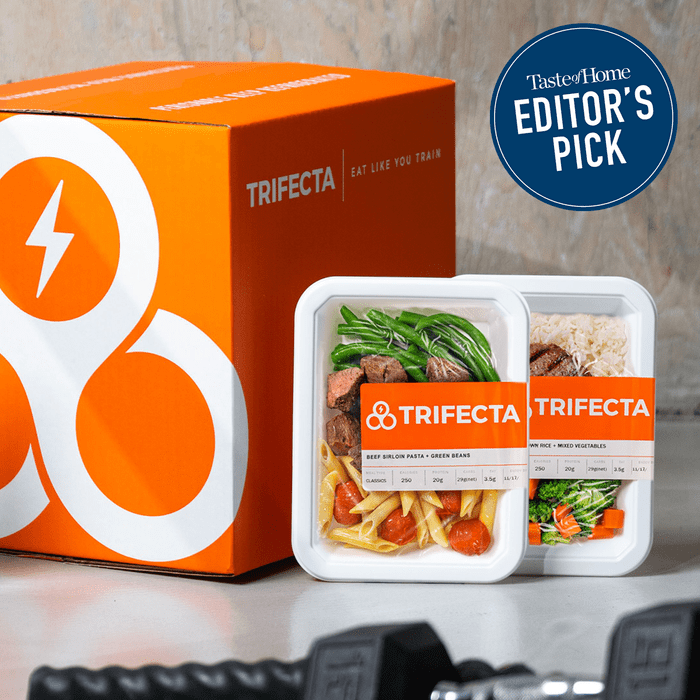
Trifecta is a nutrition and fitness company whose goal is to provide individuals with delivered meal prep in hopes that they will achieve their fitness and weight loss goals.
Role:
UX Researcher
Team project
Process:
Research plan→ Recruitment & screening → Moderated remote usability testing → Findings synthesis → Stakeholder presentation
The Problem Statement
Trifecta, a nutrition and fitness meal-delivery company, transitioned from pre-selected weekly meal boxes to a self-service model that allows customers to choose their own entrees each week. Prior to launch, stakeholders sought to determine whether the new "select your own meals" process was effective for actual users.
Our team was engaged to address three primary questions:
Who are Trifecta's customers?
What is their experience navigating the new meal-selection prototype?
How can this experience be improved to increase conversions and enhance customer retention?
We designed and conducted a moderated usability study to identify points where users hesitated, misunderstood key interface elements, or lost confidence during the meal plan selection and purchase process.
Research Foundation
This project was guided by a formal research plan. We defined eight specific research questions in advance, addressing topics such as user understanding of premium protein costs, discovery of the Meal Prep section, and whether the meal-selection process introduced sufficient friction to cause purchase abandonment.
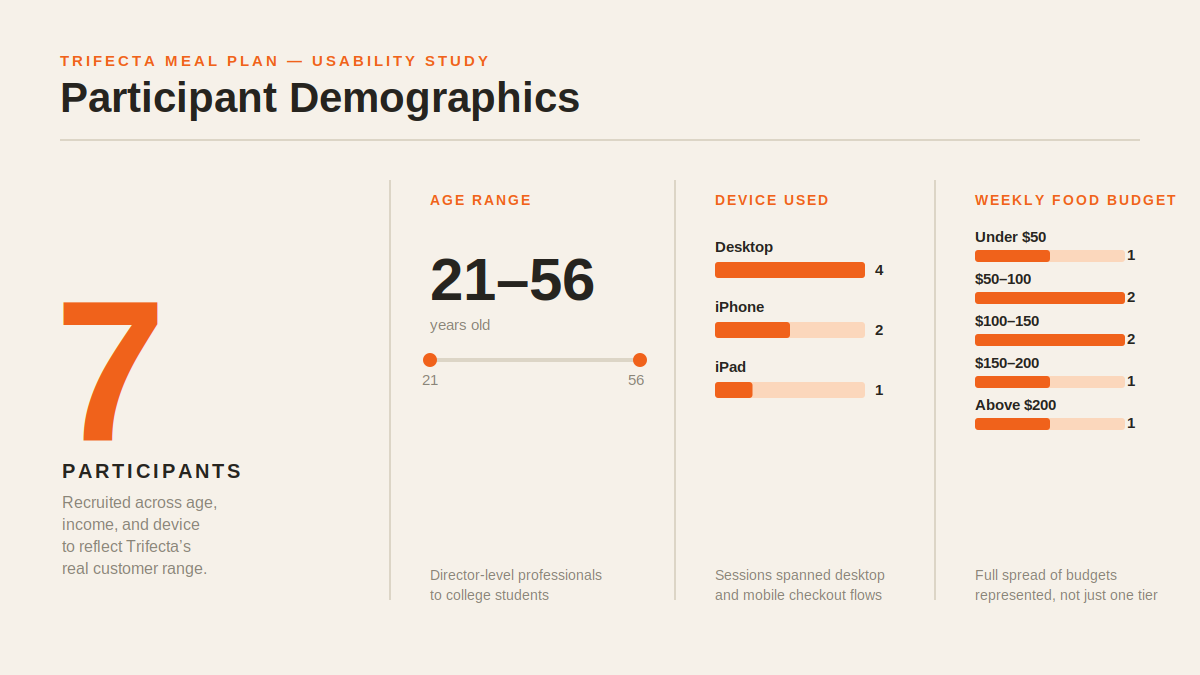
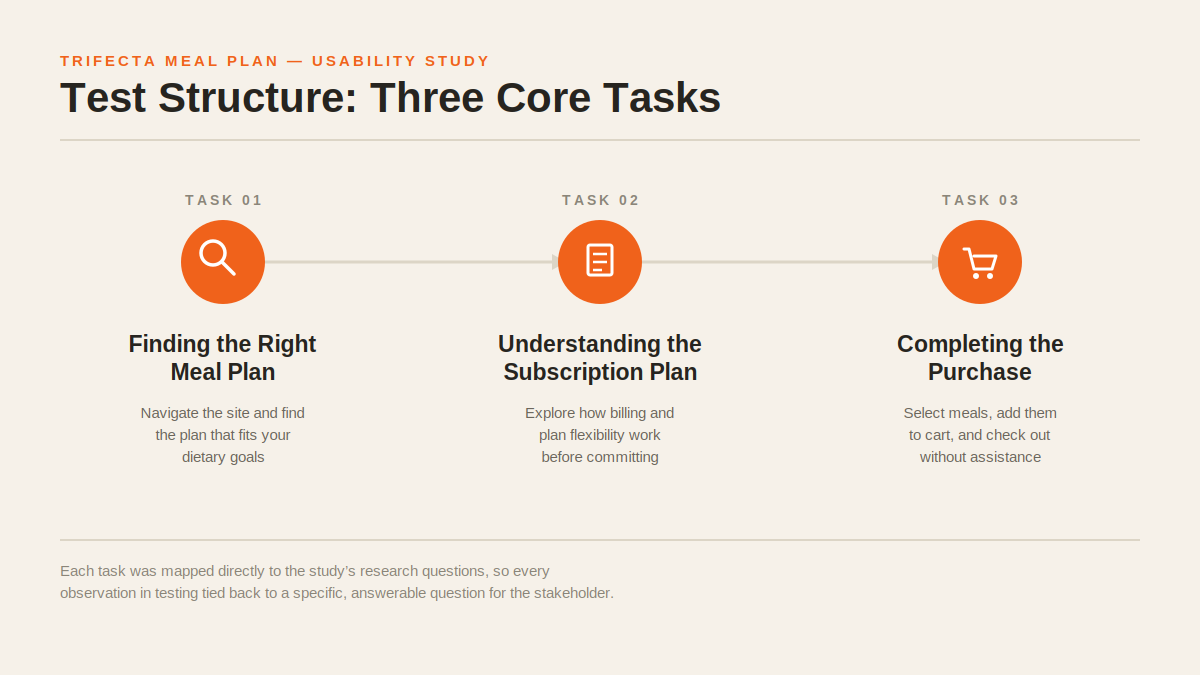
We developed a recruitment plan targeting six to eight participants using a screener survey to ensure diversity in age, income, and food-spending habits. We then conducted 45-minute moderated Zoom sessions, utilizing a written moderation script and a think-aloud protocol. Each session included three structured tasks: selecting an appropriate meal plan, understanding the subscription plan, and completing a purchase.
This approach ensured that each research question corresponded to an observable aspect of the test.
Reflection
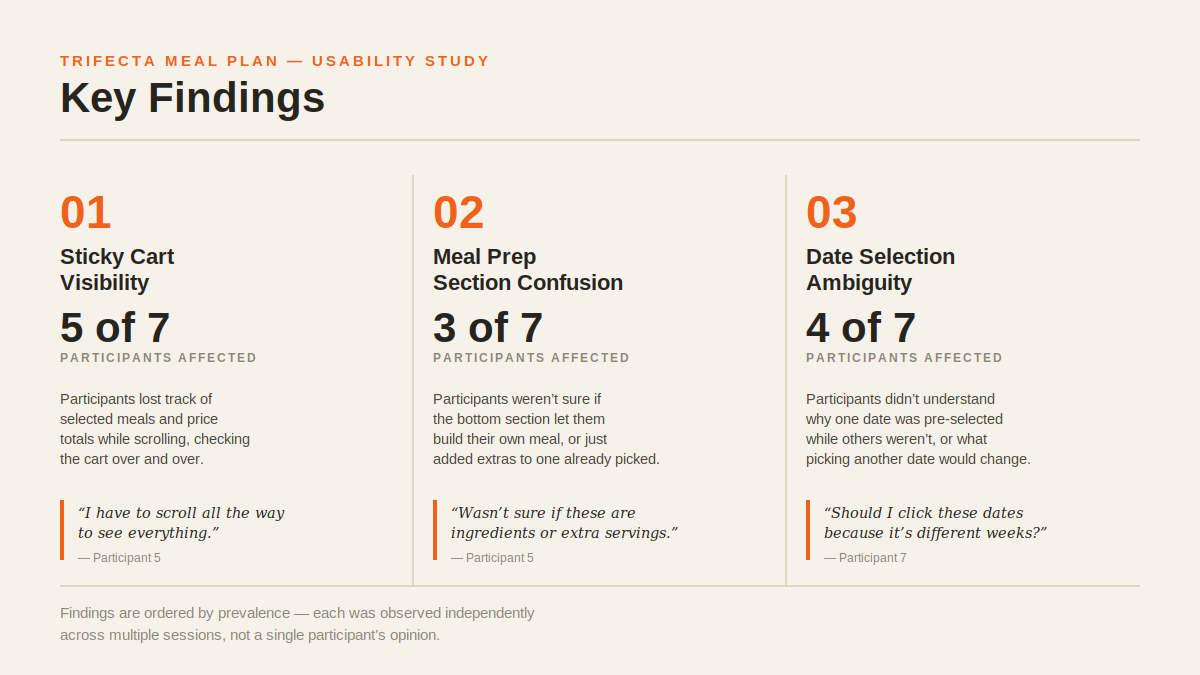
This study highlighted the significant impact that minor interface elements, such as cart visibility, section labeling, and date affordances, can have on the overall effectiveness of a product concept. If I were to extend this research, I would conduct a more thorough evaluation of the mobile checkout flow, given that several participants used iPhone and iPad devices while our findings primarily focused on desktop behavior. Additionally, I would incorporate the unsolicited feedback regarding allergen and ingredient filtering into a subsequent study, as it directly influences customer conversion.
For a comprehensive overview of the research plan, moderation guide, and detailed task-by-task findings, please refer to the complete case study provided below.