Sensory Cove
A sensory support app for neurodivergent children.
Role:
UX/UI Designer
Team project
Process:
Design Thinker
The Problem Statement
Many products and environments are designed around neurotypical users, often overlooking the needs of neurodivergent children in everyday spaces — places neurotypical people may view as ordinary, such as a grocery store or other crowded area. This lack of inclusivity can result in environments that are overwhelming, inaccessible, or alienating for parents raising children on the spectrum, which is the gap this project set out to address.
Research Foundation
Design decisions were grounded in research on autism spectrum disorder, including neurological differences in sensory processing, emotional regulation, and brain connectivity, alongside literature on therapeutic game design and sound design for neurodivergent users.
Personas
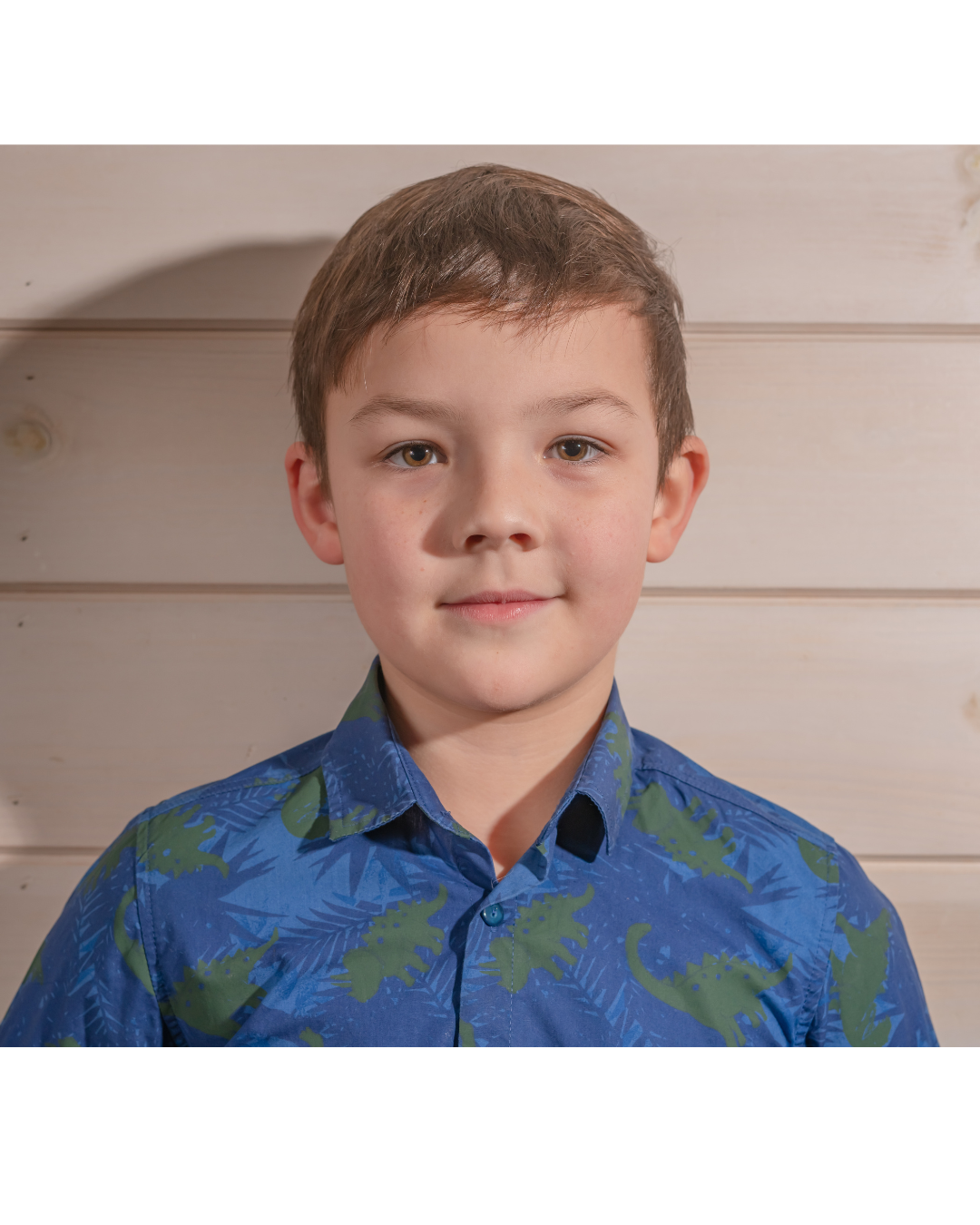
Age: 10 years oldNeurodivergence: Autism & Sensory Processing Disorder (SPD)Ollie Thompson
Ollie enjoys playing educational games about space and dinosaurs and watching YouTube videos with slow, detailed explanations.
Age: 8 years oldNeurodivergence: Autism & Sensory Processing Disorder (SPD)Ava Carter
Ava enjoys using her tablet to draw, but some drawing apps have become overwhelming with bright screens that strain her eyes.
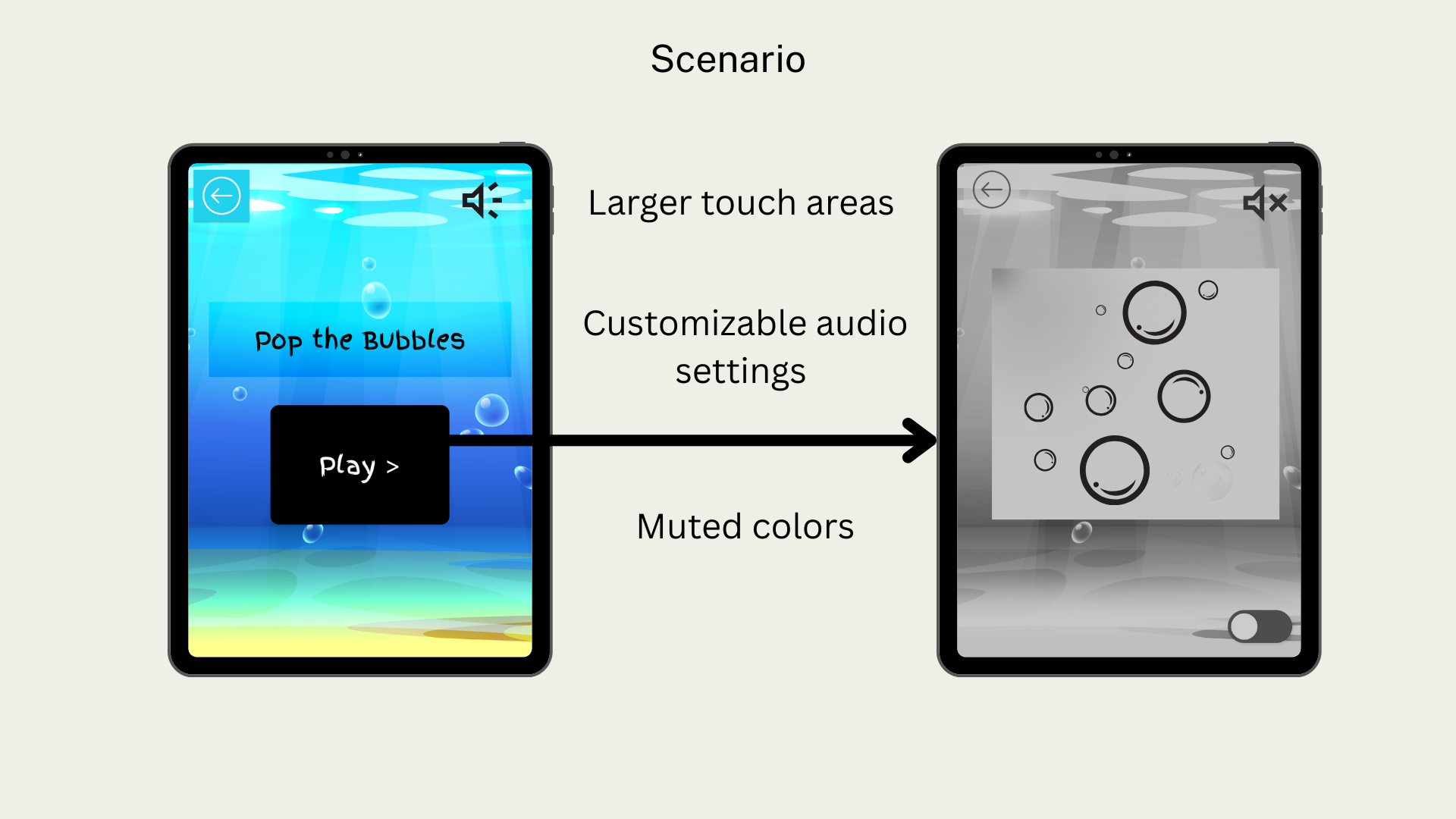
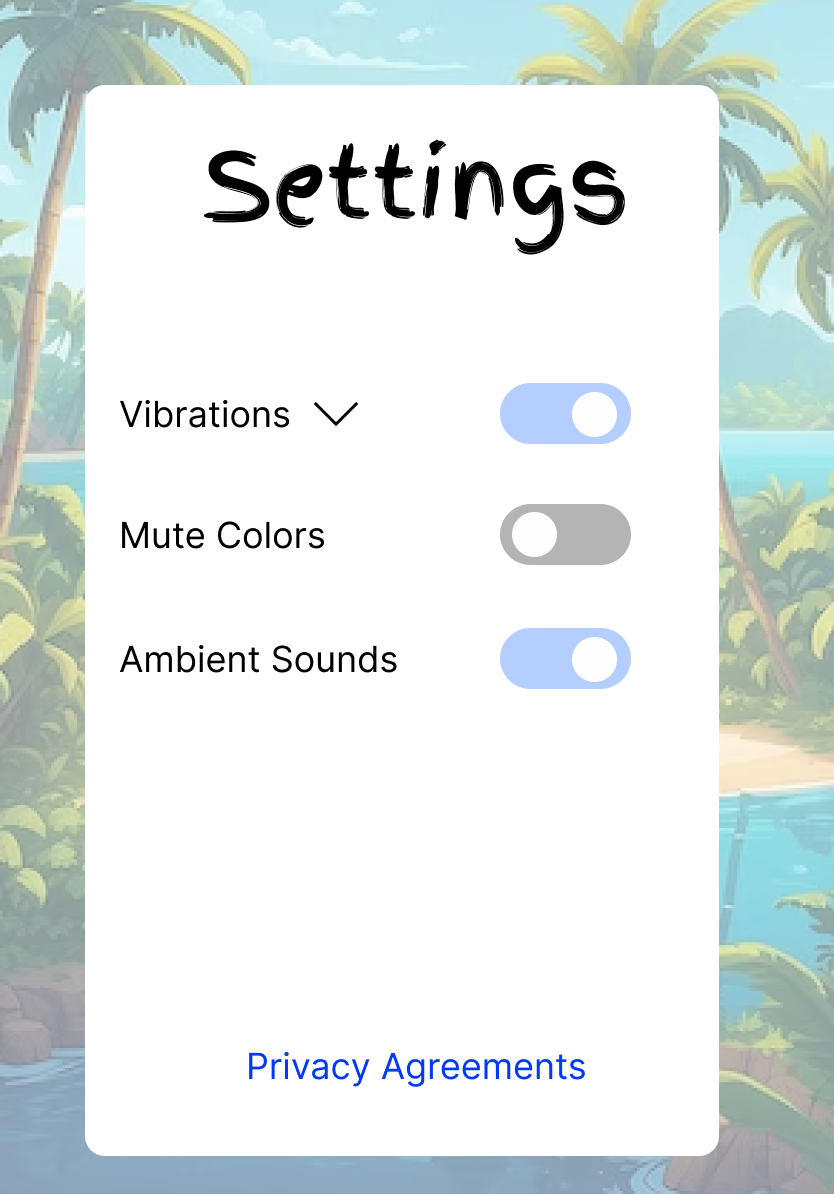
The same game can be experienced in two different ways allowing for the game to be enjoyed by children with all varies of sensitivity. This shows how a single design toggle transforms an overstimulating screen into a calming one.
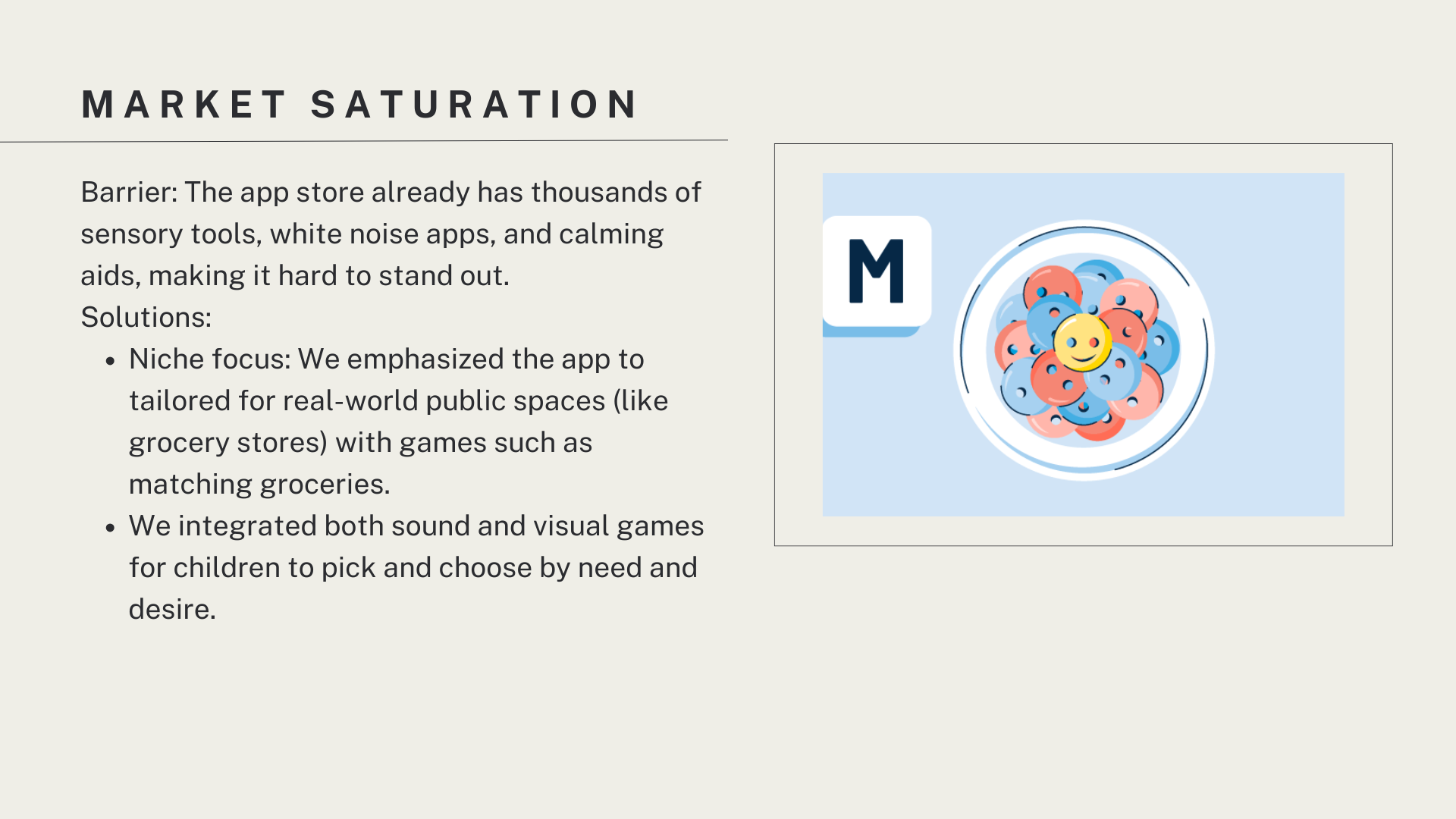
Barrier: Market Saturation
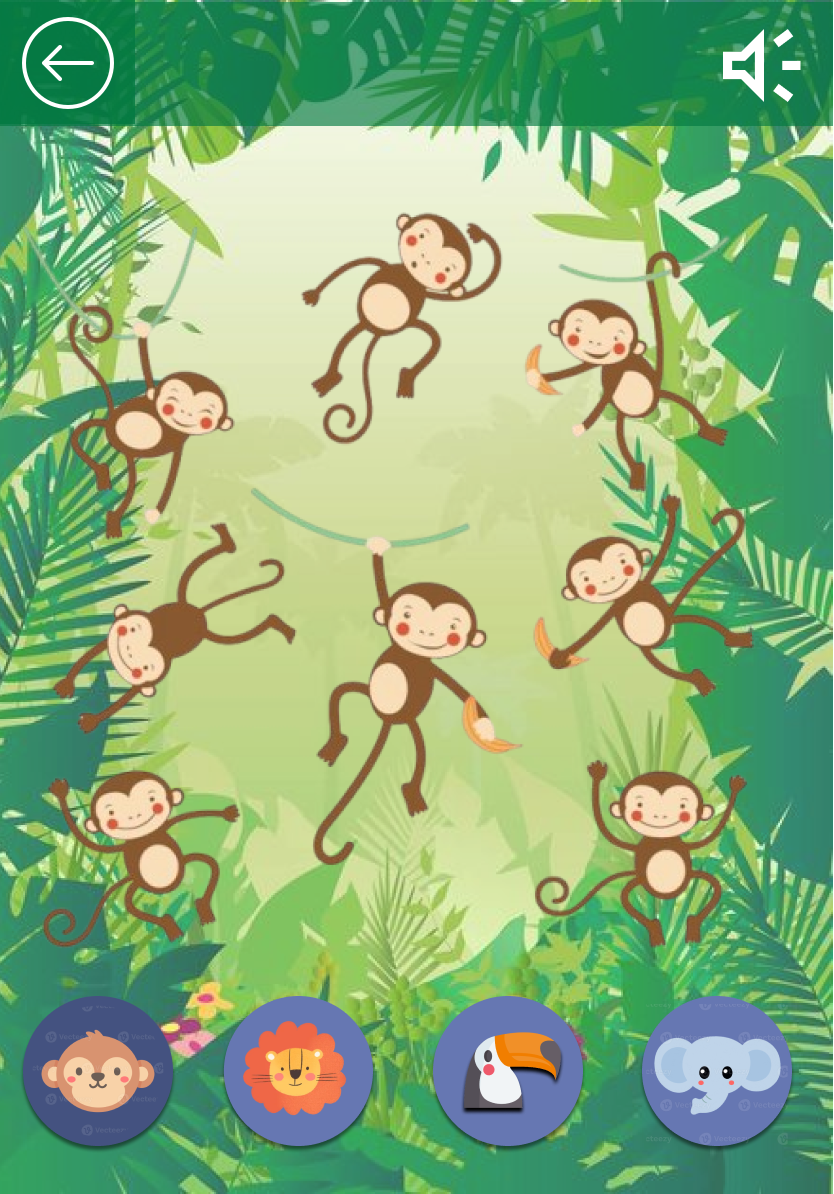
We narrowed the focus to real-world public spaces, designing games like Grocery Island that mirror the exact environments where children experience sensory overload.
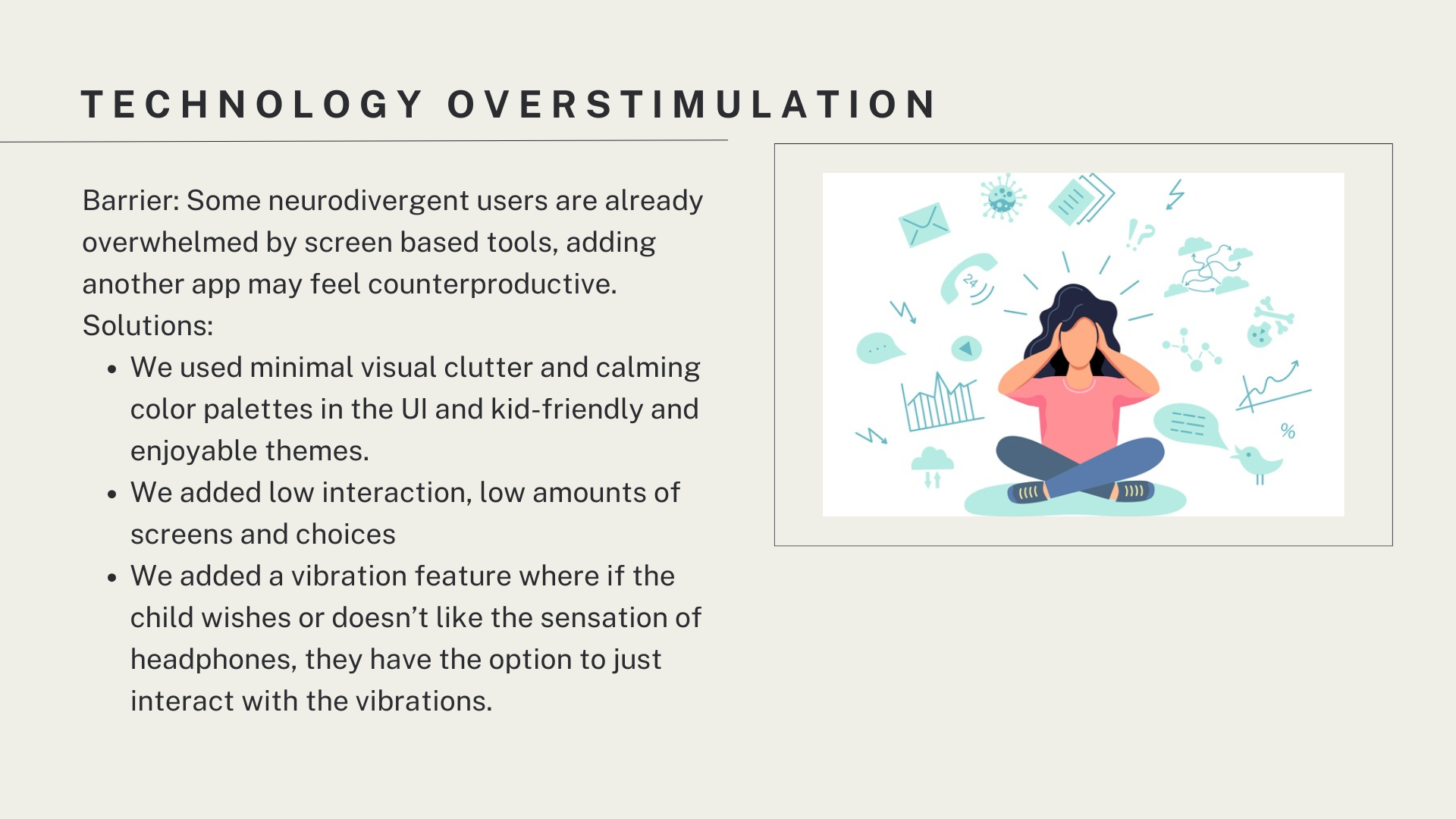
Barrier: Technology Overstimulation
Minimal visual clutter, low-interaction screens, and an optional vibration-only mode give children a calming experience rather than adding to the noise.
Barrier: Parent Concerns
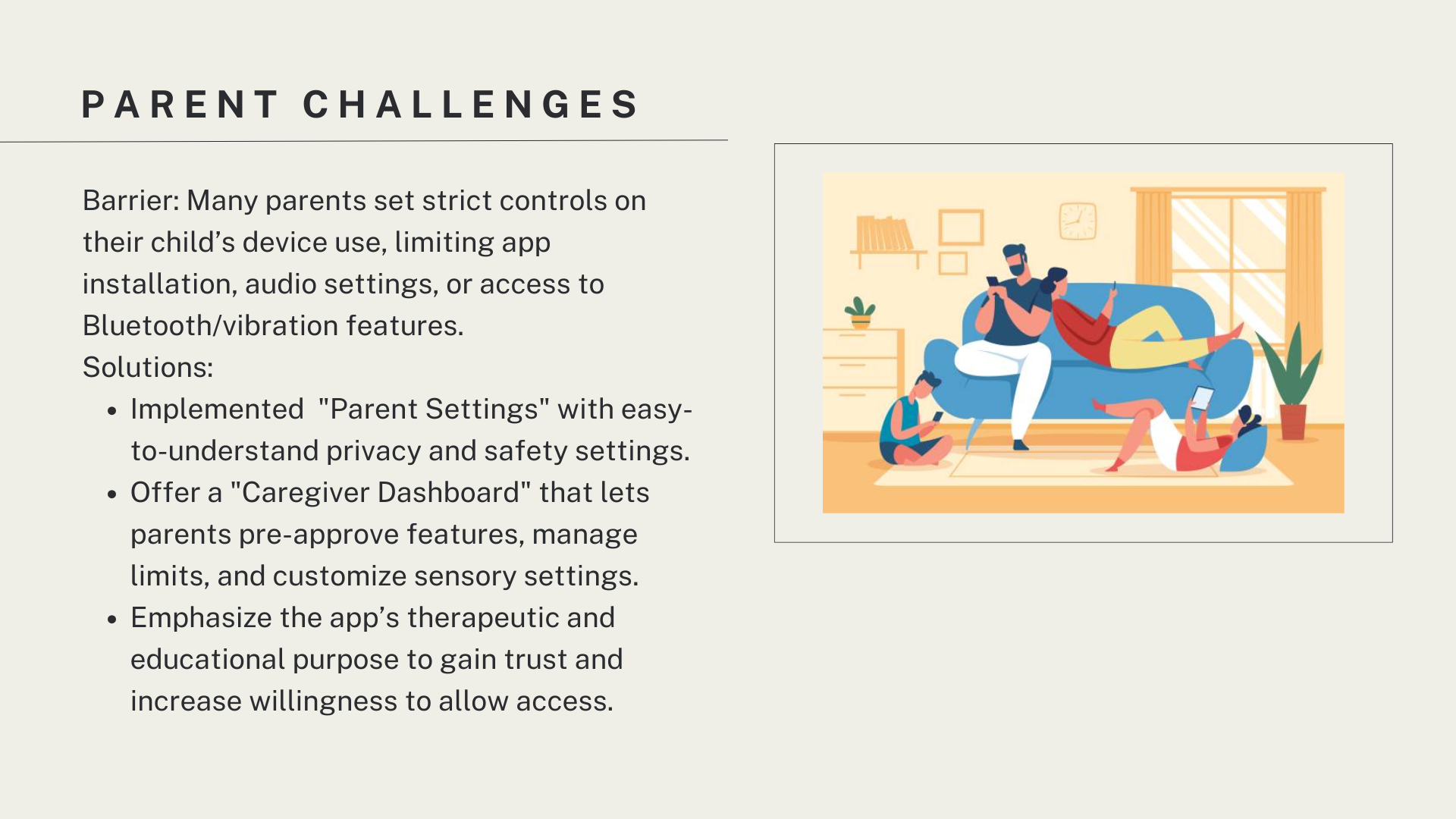
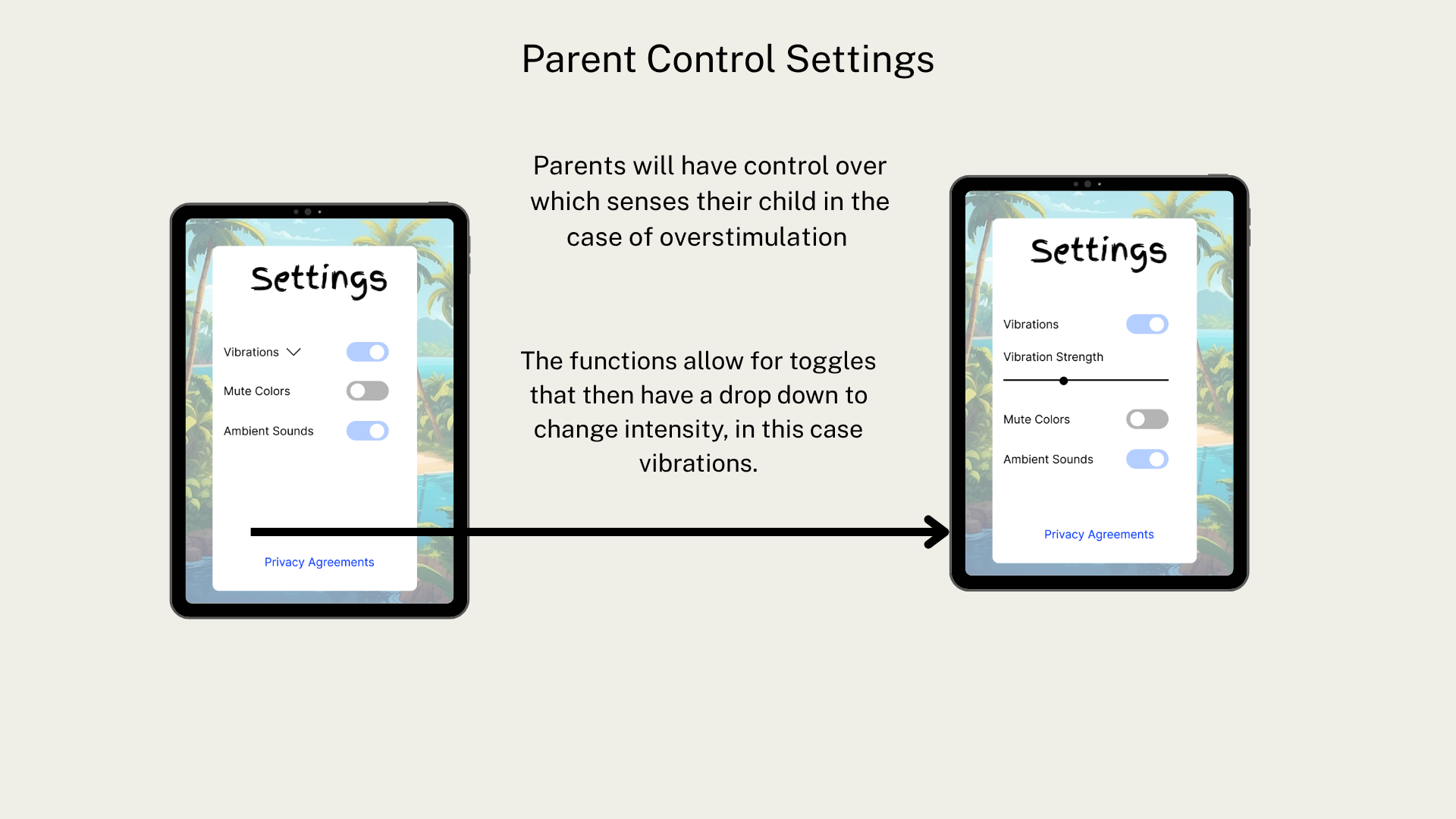
A Caregiver Dashboard and Parent Settings let parents pre-approve features, adjust sensory intensity, and maintain control over what their child accesses.
Full Screens